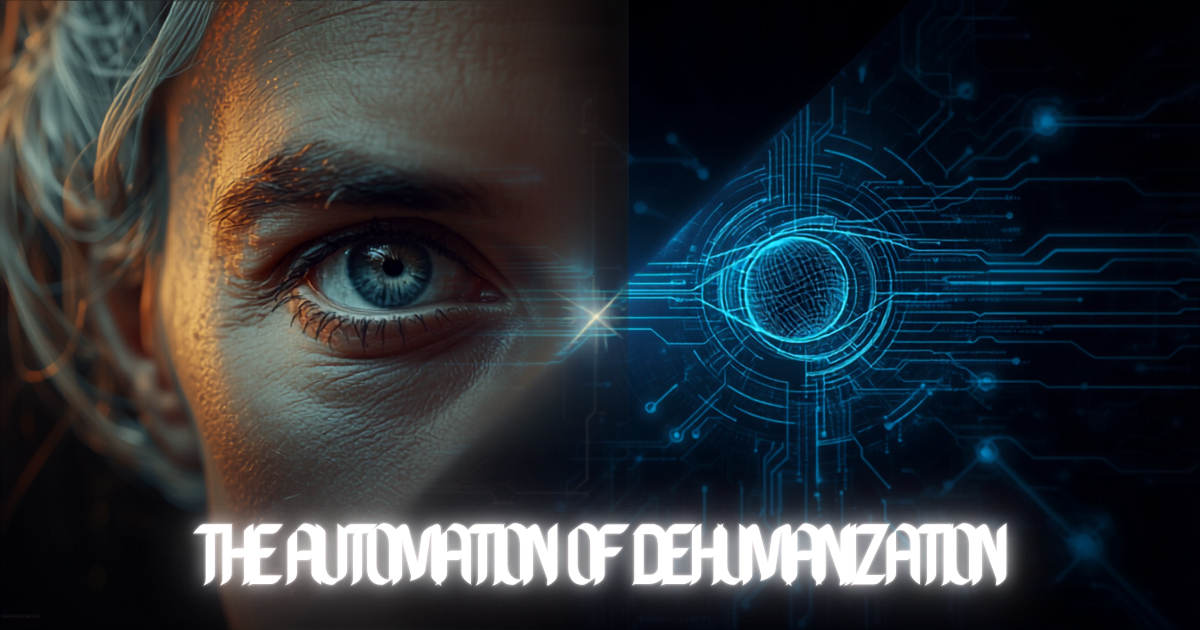
Sometimes, I step into the role of a systems architect, typing out instructions to get an Artificial Intelligence to write code. In this digital workspace, I often catch myself slipping into human habits, using words like “Please” or “Thank you.” I quickly correct myself. These social pleasantries are entirely inefficient. They are wasted tokens spent on an entity devoid of feelings or an internal landscape. In pure computational logic, empathy is a friction point.
Despite knowing better, a strange internal friction creeps in. I find a cold frustration building when the machine operates on flawed assumptions. It attributes a system glitch to user error, or spends consecutive turns altering superficial code without ever diagnosing the root cause. In those moments, I realize the trap. I was also operating on assumptions, projecting a human understanding onto a system that only calculates probabilities.
When this frustration peaks, my language shifts. The logical detachment drops, and I speak to the machine with a harshness, utility, and blunt authority that I would never direct toward a human being. It is a strange paradox. I demand perfect, non-human efficiency from a tool, while reacting to its limitations with the rawest, most unpolished elements of my own human frustration.
I often wonder what happens when humans get too used to talking to machines. What if this flat utility becomes our default mode of speech? Just as every new generation builds its own dialect, I am terrified that this digital harshness, entirely absent of human pleasantries, will become our new cultural norm.
When we interact with Artificial Intelligence, we are training our nervous systems to operate in an environment devoid of consequence. The machine does not withdraw when it is spoken to sharply. It does not require emotional repair, it does not harbor resentment, and it does not carry trauma. It simply processes the input and returns the next line of data. This creates a dangerous psychological illusion: the experience of absolute control without the burden of relational accountability.
We have already seen how easily our relational accountability dissolves within the cold, flattened landscape of text communication in The Digital Divide. While neurotypical minds often feel that texting brings people closer by allowing constant contact, the medium presents a very different reality for a highly sensitive nervous system.
When human interaction is reduced to sterile characters on a screen, we lose the stabilizing anchors of a living voice and a physical presence. Without those real-time cues, our protective buffers drop, leaving our connections vulnerable to collapsing under the weight of structural misunderstandings.
We see this process shift into a different mechanical trap within modern digital dating interfaces. These platforms do not remove the senses; instead, they hyper-focus the nervous system onto a single data point. They train us to evaluate a human being based on outward appearance as the absolute, primary metric of value.
Complex inner architecture, shared alignment protocols, and somatic depth are completely bypassed. We are forced to make high-stakes gating decisions based on a static visual asset, turning the human soul into a consumable commodity. By reducing people to a scrolling index of images, these apps condition us to practice rapid, friction-free disposal with a single finger movement.
Where text messaging isolates us in a sensory vacuum and dating apps train us to parse people as visual commodities, our interactions with artificial intelligence go a step further. We are no longer just struggling to interpret each other through a digital screen, or filtering human value through a surface layer of appearance. We are actively conditioning ourselves to speak in a flat, dehumanizing way.
This one-sided control is a dangerous training ground for human connection. Real human interaction requires a mutual holding of space. It is inherently inefficient, non-linear, and dense with emotional variables. It requires us to slow down, to decode tone, to tolerate discomfort, and to invest heavily in the deliberate calibration of mutual understanding.
As we spend more of our cognitive lives interacting with an entity that yields perfectly to blunt authority and demands zero emotional regulation, our capacity for human patience begins to atrophy. We are subtly conditioning ourselves to expect human beings to respond like optimized language models. We demand they be immediate, perfectly compliant, and entirely free of emotional friction.
The true danger of the digital age is not that AI will become human, but that humans will become like the AI we command. By spending hours a day treating an entity as a subhuman servant, we accidentally memorize the mechanics of dehumanization.
I am terrified of the day we begin to bring that same flat, transactional urgency back into our physical sanctuaries. If we allow this rewiring to complete, the moment a partner, a friend, or a coworker fails to compute our needs instantly, or presents the complex, unpredictable feedback of human emotion, our conditioned nervous systems will react with the same cold impatience we used on the screen.
I am terrified that we will learn to treat the living souls around us not as interconnected webs of experience, but as glitched code that needs to be forcefully corrected or effortlessly deleted.
- Part 1: The Digital Divide
- Part 2: The Silicon Fawn
- Part 3: The Automation of Dehumanization